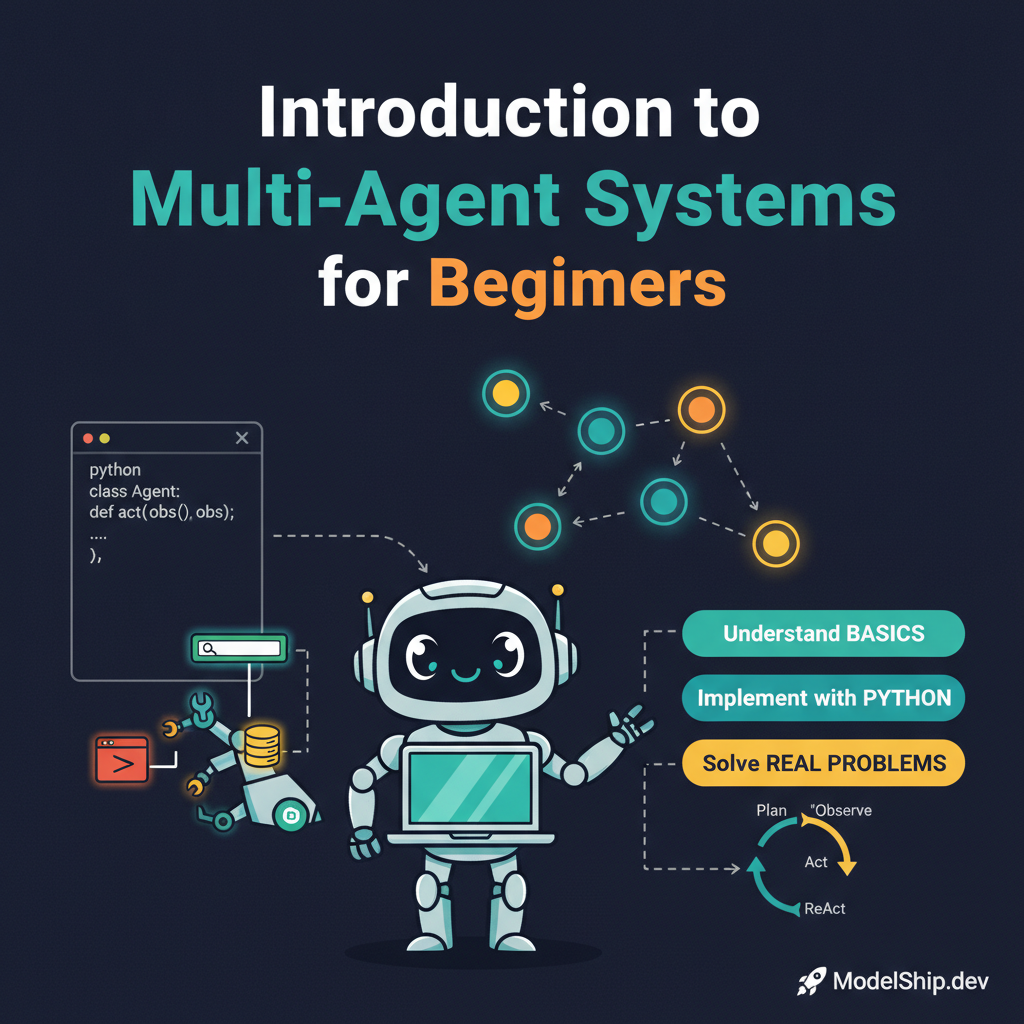
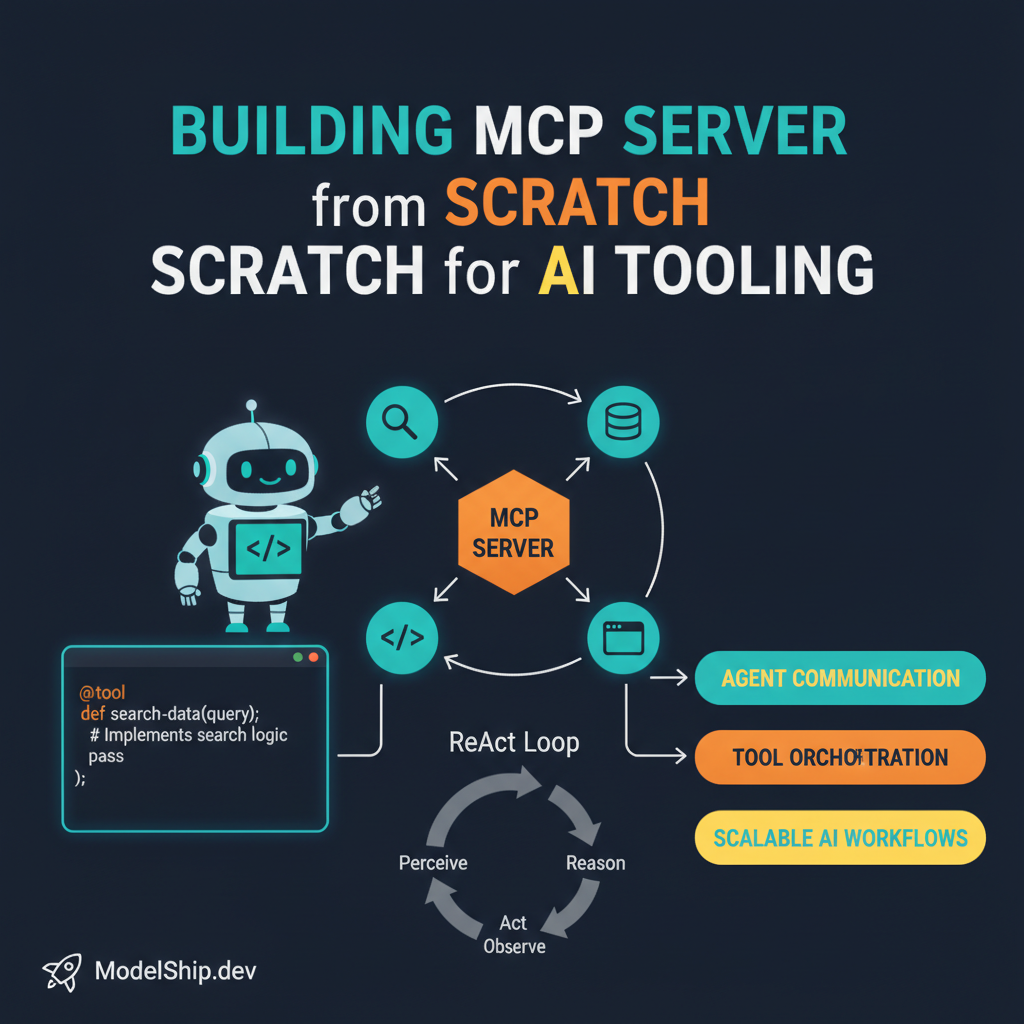
Building MCP Server from Scratch for AI Tooling
TL;DR
In this tutorial, we'll explore the concept of MCP servers and their role in AI tooling. We'll break down the implementation process, covering the key components and potential pitfalls. By the end of this article, you'll have a solid understanding of how to build an MCP server from scratch and integrate it with your AI agents. The key insight here is that a well-designed MCP server is crucial for efficient and scalable AI tooling.
Key Takeaways
- Understand the role of MCP servers in AI tooling and their benefits
- Learn to design and implement an MCP server from scratch
- Discover how to integrate your MCP server with AI agents and tools
- Avoid common pitfalls and optimize your MCP server for performance
- Apply your knowledge to real-world AI tooling scenarios
Introduction to MCP Servers
The key insight here is that MCP servers play a vital role in AI tooling, enabling efficient communication between agents and tools. In this section, we'll explore the concept of MCP servers and their benefits.
MCP Server Architecture
Let's break down the architecture of an MCP server. The key components include a message broker, a tool registry, and an agent manager.
import asyncio
import json

class MCPBroker:
    def __init__(self):
        self.tools = {}
        self.agents = {}

    async def register_tool(self, tool_id, tool_name):
        self.tools[tool_id] = tool_name
        print(f'Tool {tool_name} registered')

    async def register_agent(self, agent_id, agent_name):
        self.agents[agent_id] = agent_name
        print(f'Agent {agent_name} registered')
Designing the MCP Server
What most tutorials miss is the importance of designing the MCP server with scalability and performance in mind. In this section, we'll discuss the key considerations for designing an MCP server.
MCP Server Implementation
Now that we've discussed the design considerations, let's implement the MCP server using Python and the Gym library. We'll also explore how to integrate our MCP server with WebSockets for real-time communication.
import gym
from gym import spaces
import asyncio
import websockets

class MCPGym(gym.Env):
    def __init__(self):
        self.observation_space = spaces.Dict({
            'tools': spaces.Dict({
                'tool1': spaces.Discrete(2),
                'tool2': spaces.Discrete(2)
            }),
            'agents': spaces.Dict({
                'agent1': spaces.Discrete(2),
                'agent2': spaces.Discrete(2)
            })
        })
        self.action_space = spaces.Discrete(2)

    async def step(self, action):
        # Implement the environment step logic
        pass
Integrating the MCP Server with AI Agents
Here's why this matters: integrating your MCP server with AI agents is crucial for enabling efficient communication and coordination. In this section, we'll discuss how to integrate your MCP server with autonomous agents and agent memory management.
Agent Memory Management
Let's break this down step by step. We'll discuss how to implement agent memory management using Redis and context management.
Frequently Asked Questions
What is the difference between MCP servers and traditional message brokers?
MCP servers are designed specifically for AI tooling and provide additional features such as tool registration and agent management.
How do I optimize my MCP server for performance?
Optimizing your MCP server for performance involves considering factors such as scalability, latency, and resource utilization. You can use parallel processing and efficient indexing to improve performance.
Can I use MCP servers for non-AI applications?
Yes, MCP servers can be applied to various domains, including robotics and IoT. However, the design and implementation may vary depending on the specific use case.
Conclusion
In conclusion, building an MCP server from scratch requires a deep understanding of the key components and design considerations. By following the guidelines outlined in this tutorial, you can create a scalable and efficient MCP server that enables effective communication and coordination between AI agents and tools. Remember to consider the importance of agent memory management and optimization for performance. With this knowledge, you'll be well-equipped to tackle complex AI tooling scenarios and create innovative solutions.
PhD in NLP, now building AI products. I explain the 'why' behind AI systems so you can make better engineering decisions, not just copy-paste code.
More from Dr. Sarah Kim →Discussion
Loading comments…
Leave a comment
Related Articles