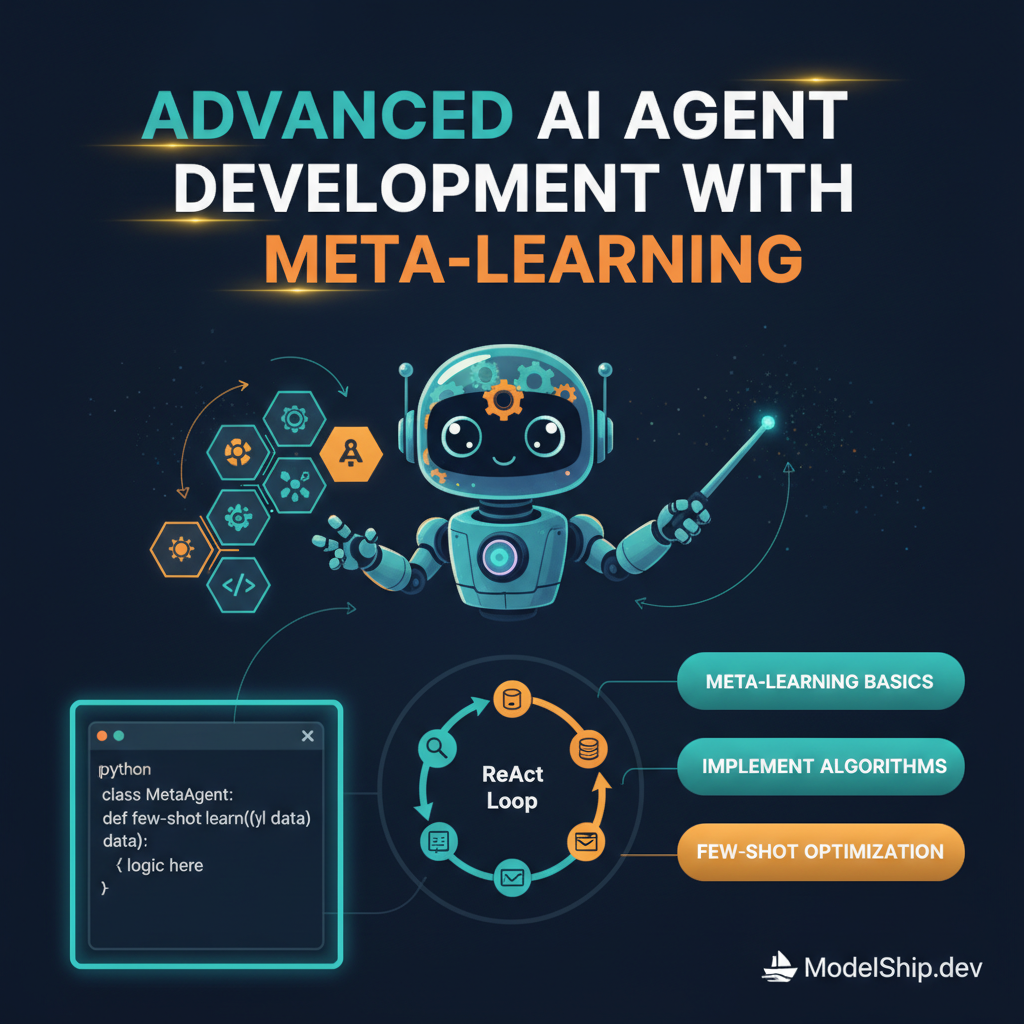
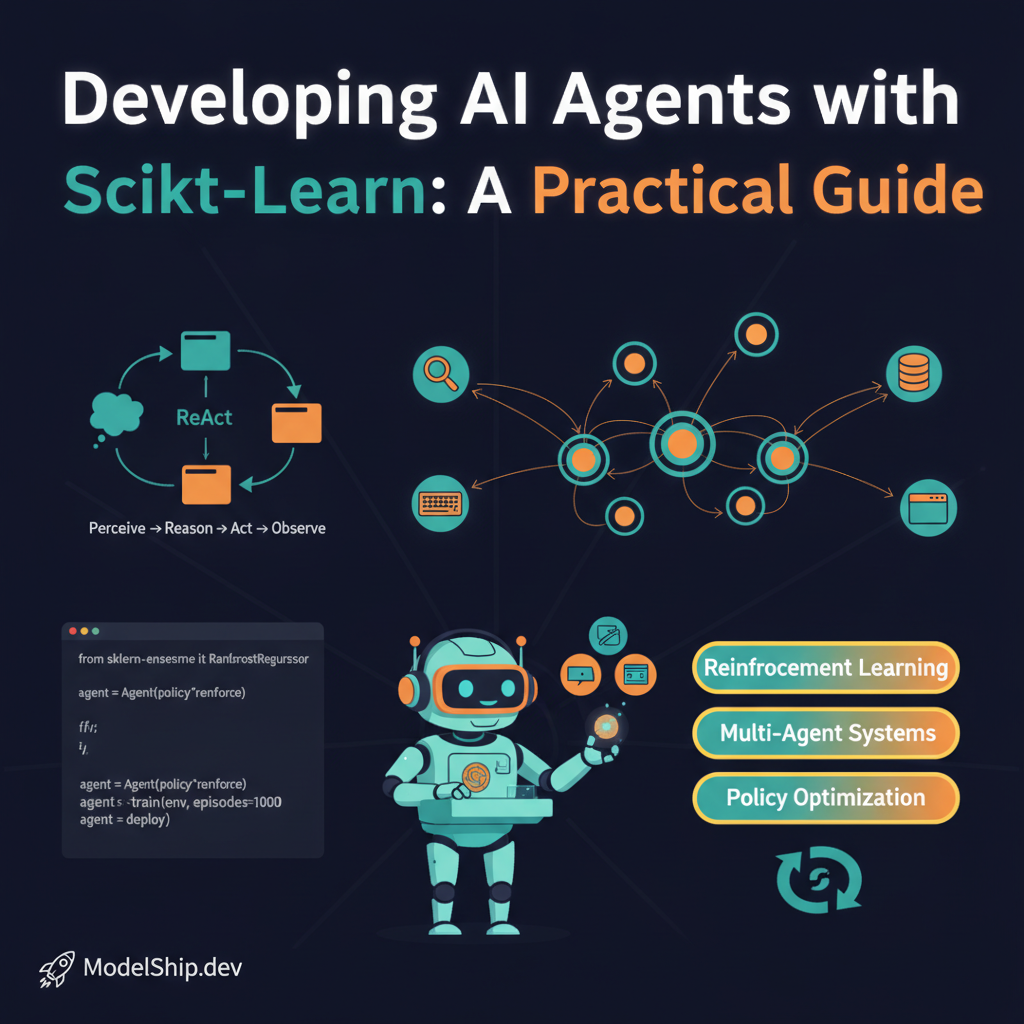
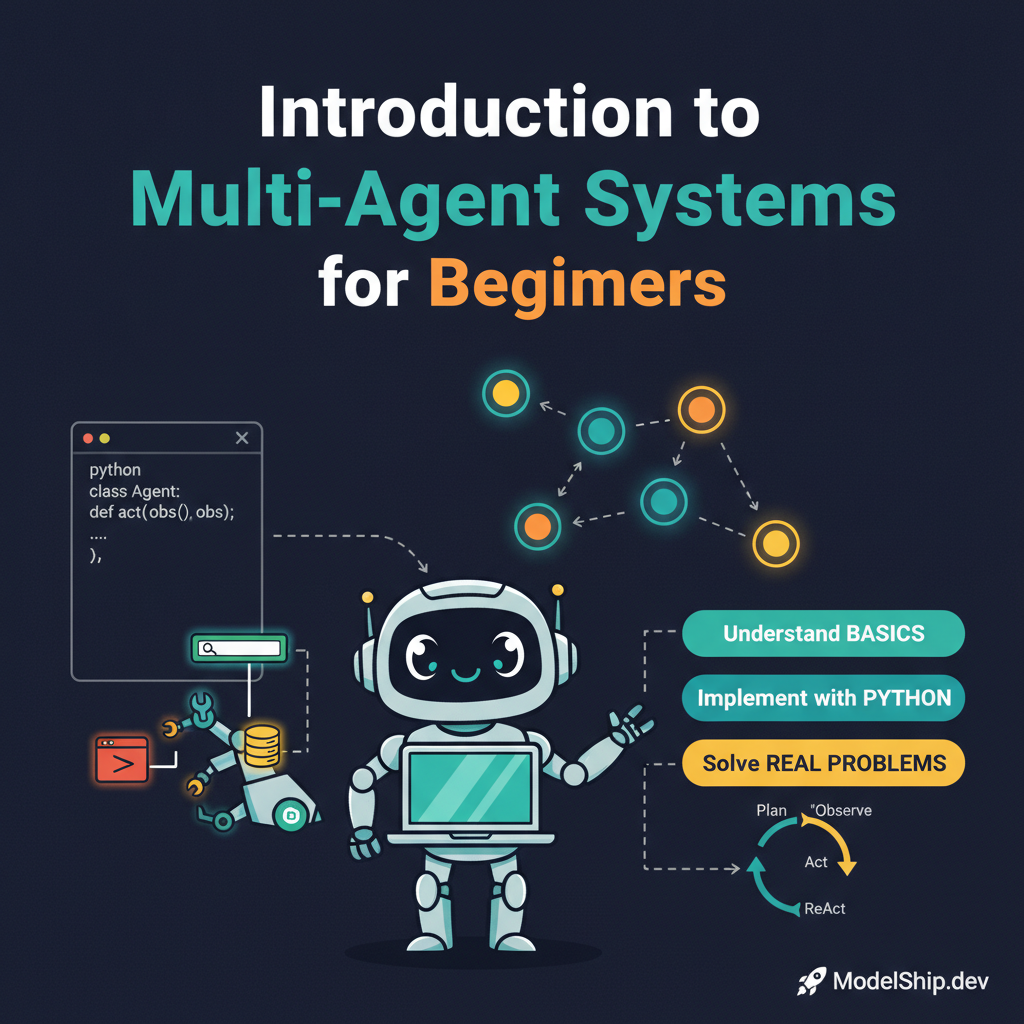
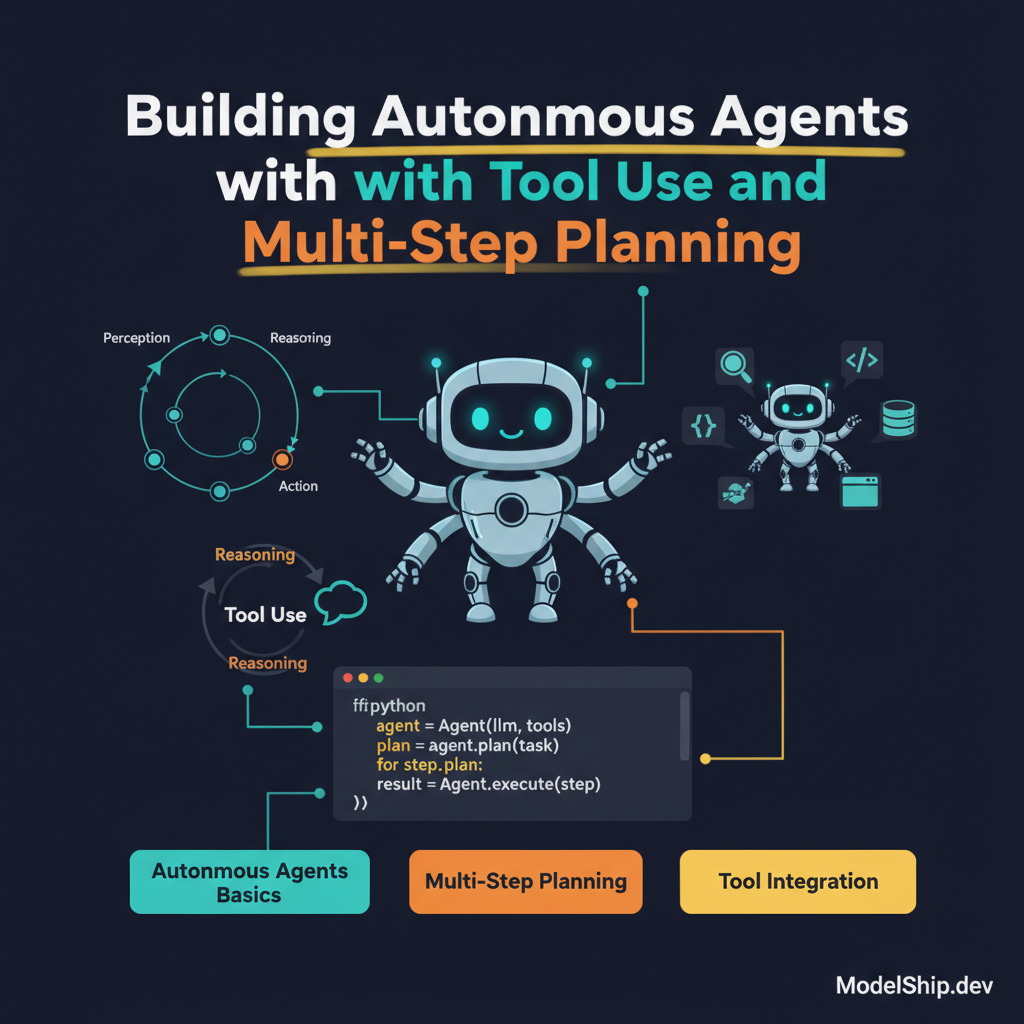
Building Autonomous Agents with Tool Use and Multi-Step Planning
TL;DR
In this tutorial, we'll explore how to build autonomous agents that can use tools and plan multiple steps to achieve a goal. You'll learn how to design and implement these agents using simple, step-by-step instructions. Don't worry if you're new to this - I'll guide you through the process with real-life examples and analogies.
Key Takeaways
- Understand the basics of autonomous agents and their applications
- Learn how to design and implement multi-step planning for AI agents
- Discover how to integrate tool use into your autonomous agent's workflow
- Master the art of optimizing AI agent performance with reinforcement learning
- Explore the power of LangGraph-based agentic RAG for autonomous agents
Introduction to Autonomous Agents
Think of it like having a personal assistant that can perform tasks on its own. Autonomous agents are AI systems that can act independently to achieve a goal. They can be used in various applications, such as robotics, finance, and healthcare. Here's a simple way to understand how autonomous agents work: imagine a robot that can navigate through a maze to reach a target. The robot uses its sensors to perceive the environment and make decisions to move towards the target.Types of Autonomous Agents
There are several types of autonomous agents, including reactive, deliberative, and hybrid agents. Reactive agents respond to the environment without planning, while deliberative agents plan ahead to achieve a goal. Hybrid agents combine both reactive and deliberative approaches.Applications of Autonomous Agents
Autonomous agents have numerous applications in real-life scenarios. For example, they can be used in self-driving cars, personal assistants, and smart homes. I love this trick because it allows us to create systems that can learn and adapt to new situations.Designing Multi-Step Planning for AI Agents
Don't worry if you're new to this - designing multi-step planning for AI agents is easier than you think. You don't need to be a programmer to understand the basics. Here's a step-by-step guide to get you started:import numpy as npImplementing Multi-Step Planning
To implement multi-step planning, you'll need to use a programming language like Python. Here's an example code snippet:def plan_actions(goal, actions):
# Define the planning algorithm
# Find the optimal sequence of actions
return optimal_sequenceCommon Mistakes to Avoid
Integrating Tool Use into Autonomous Agents
Think of it like having a toolbox that the agent can use to perform tasks. Integrating tool use into autonomous agents can enhance their capabilities and efficiency. Here's a simple way to integrate tool use: define the tools and their corresponding actions. Then, use a planning algorithm to select the optimal tool for each task.Types of Tools
There are various types of tools that autonomous agents can use, including physical tools like robots and software tools like algorithms.Implementing Tool Use
To implement tool use, you'll need to define the tools and their corresponding actions. You can use a LangGraph-based agentic RAG to represent the tools and their relationships.Optimizing AI Agent Performance
You don't need to be an expert to optimize AI agent performance. Here's a simple way to get started: use reinforcement learning to optimize the agent's policies. You can also use parallel processing to speed up the optimization process.Reinforcement Learning
Reinforcement learning is a type of machine learning that involves training an agent to take actions to maximize a reward. You can use reinforcement learning to optimize the agent's policies and improve its performance.Common Challenges
LangGraph-Based Agentic RAG for Autonomous Agents
LangGraph-based agentic RAG is a powerful framework for building autonomous agents. It allows you to represent the agent's knowledge and goals using a graph structure. Here's a simple way to get started: define the agent's goals and knowledge using a graph. Then, use the graph to plan and optimize the agent's actions.Representing Knowledge and Goals
To represent the agent's knowledge and goals, you'll need to define the graph structure. You can use a graph database like Neo4j to store and query the graph.Planning and Optimization
To plan and optimize the agent's actions, you'll need to use a planning algorithm. You can use algorithms like multi-agent task decomposition to optimize the planning process.Frequently Asked Questions
What is an Autonomous Agent?
An autonomous agent is an AI system that can act independently to achieve a goal. It can be used in various applications, such as robotics, finance, and healthcare.
How Do I Design a Multi-Step Planning Algorithm?
To design a multi-step planning algorithm, you'll need to define the goal and the possible actions. Then, use a planning algorithm to find the optimal sequence of actions. You can use algorithms like reinforcement learning to optimize the planning process.
What is LangGraph-Based Agentic RAG?
LangGraph-based agentic RAG is a powerful framework for building autonomous agents. It allows you to represent the agent's knowledge and goals using a graph structure.
Conclusion
In conclusion, building autonomous agents with tool use and multi-step planning is easier than you think. By following the steps outlined in this tutorial, you can create AI systems that can act independently to achieve a goal. Remember to balance exploration and exploitation, and don't be afraid to try new things. Happy building!I help everyday people understand and use AI tools without a tech degree. Former teacher turned content creator — I believe AI should be accessible to everyone.
More from Priya Patel →Discussion
Loading comments…
Leave a comment
Related Articles