Automating AI Deployment with Ansible and Terraform
TL;DR
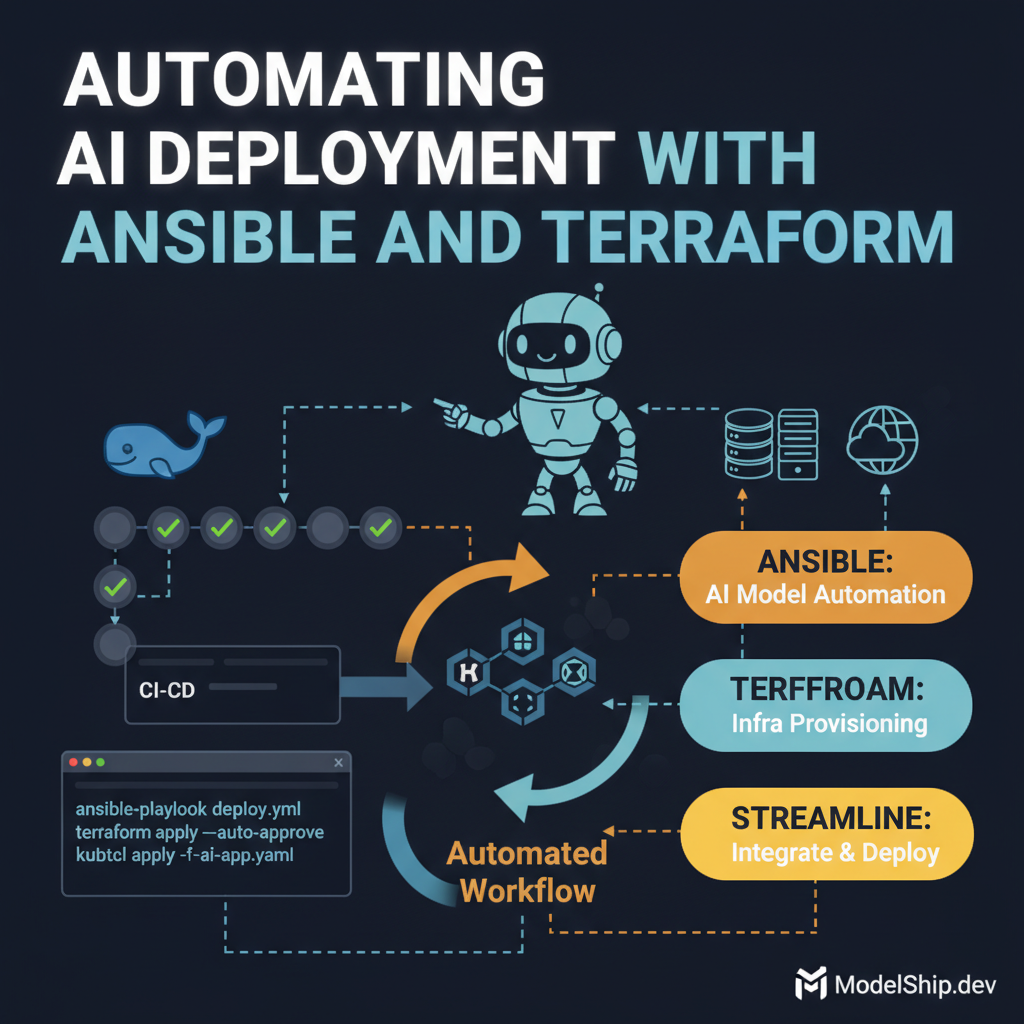
Here's the thing, automating AI deployment is crucial for efficient model shipping. I'll show you how to use Ansible and Terraform to streamline your workflow. Let me walk you through the process, highlighting gotchas and best practices along the way.
Key Takeaways
- Use Ansible for automating AI model deployment and management
- Leverage Terraform for infrastructure provisioning and management
- Streamline your workflow by integrating Ansible and Terraform
- Monitor and troubleshoot your deployment with Prometheus and Grafana
- Implement CI/CD pipelines for automated testing and deployment
Automating AI Deployment with Ansible and Terraform: An Intermediate Guide
As an AI engineer, I've learned that automating deployment is crucial for efficient model shipping. In this article, I'll show you how to use Ansible and Terraform to streamline your workflow.
Introduction to Ansible and Terraform
Here's the thing, Ansible and Terraform are two powerful tools that can help you automate your AI deployment. Ansible is an automation tool that can help you manage and deploy your AI models, while Terraform is an infrastructure provisioning tool that can help you manage your infrastructure.
What is Ansible?
Ansible is an automation tool that can help you manage and deploy your AI models. It's a simple, yet powerful tool that can help you automate repetitive tasks and streamline your workflow.
What is Terraform?
Terraform is an infrastructure provisioning tool that can help you manage your infrastructure. It's a powerful tool that can help you create, manage, and destroy infrastructure resources such as virtual machines, networks, and databases.
Setting up Ansible and Terraform
Let me show you exactly how I set up Ansible and Terraform. First, you'll need to install Ansible and Terraform on your machine. You can do this by running the following commands:
pip install ansible
brew install terraform
Configuring Ansible
Once you've installed Ansible, you'll need to configure it. You can do this by creating a configuration file called ansible.cfg. Here's an example configuration file:
[defaults]
inventory = /path/to/inventory
Configuring Terraform
Once you've installed Terraform, you'll need to configure it. You can do this by creating a configuration file called main.tf. Here's an example configuration file:
provider 'aws' {
  region = 'us-west-2'
}Automating AI Deployment with Ansible and Terraform
In my experience, automating AI deployment with Ansible and Terraform is a game-changer. It can help you streamline your workflow and reduce the time it takes to deploy your models. Here's an example of how you can use Ansible and Terraform to automate your AI deployment:
---
- name: Deploy AI model
  hosts: all
  become: yes
  tasks:
  - name: Install dependencies
    apt:
      name: python3-pip
      state: present
  - name: Deploy model
    copy:
      content: 'model.py'
      dest: /path/to/model.py
  - name: Run model
    command: python3 /path/to/model.py
Integrating with CI/CD Pipelines
This is the part most tutorials skip, but integrating your Ansible and Terraform deployment with CI/CD pipelines is crucial for automated testing and deployment. You can use tools like CircleCI and GitHub Actions to automate your testing and deployment.
Monitoring and Troubleshooting
Once you've deployed your model, you'll need to monitor and troubleshoot it. You can use tools like Prometheus and Grafana to monitor your model's performance and troubleshoot any issues that arise.
Best Practices for Automating AI Deployment
Here are some best practices for automating AI deployment with Ansible and Terraform:
Use Version Control
Using version control is crucial for automating AI deployment. It can help you keep track of changes to your code and infrastructure, and ensure that you can roll back to a previous version if something goes wrong.
Test Your Deployment
Testing your deployment is crucial for ensuring that it works as expected. You can use tools like Kubernetes to test your deployment and ensure that it's working correctly.
Common Mistakes to Avoid
Here are some common mistakes to avoid when automating AI deployment with Ansible and Terraform:
Not Using Version Control
Not using version control can lead to lost changes and difficulty rolling back to a previous version.
Not Testing Your Deployment
Not testing your deployment can lead to unexpected behavior and errors.
Frequently Asked Questions
What is the difference between Ansible and Terraform?
Ansible is an automation tool that can help you manage and deploy your AI models, while Terraform is an infrastructure provisioning tool that can help you manage your infrastructure.
How do I integrate Ansible and Terraform with CI/CD pipelines?
You can use tools like CircleCI and GitHub Actions to automate your testing and deployment.
What is the best way to monitor and troubleshoot my AI model?
You can use tools like Prometheus and Grafana to monitor your model's performance and troubleshoot any issues that arise.
Conclusion
In conclusion, automating AI deployment with Ansible and Terraform is a game-changer. It can help you streamline your workflow and reduce the time it takes to deploy your models. By following the best practices outlined in this article, you can ensure that your AI deployment is efficient, reliable, and scalable. Check out our article on Containerizing AI Apps with Docker for more information on how to containerize your AI models.
7 years building production AI systems. I write about the stuff that actually works in the real world — practical code, real architectures, zero fluff.
More from Alex Chen →Discussion
Loading comments…
Leave a comment
Related Articles