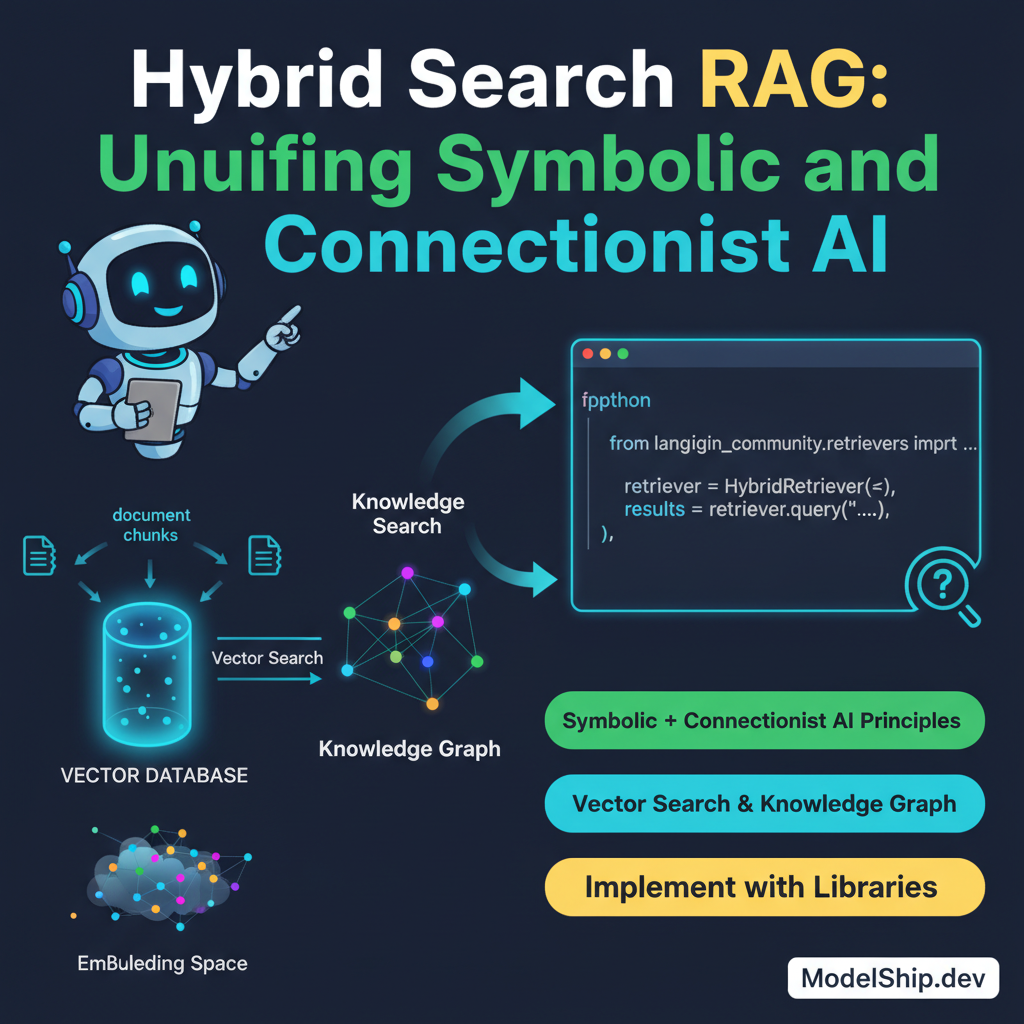
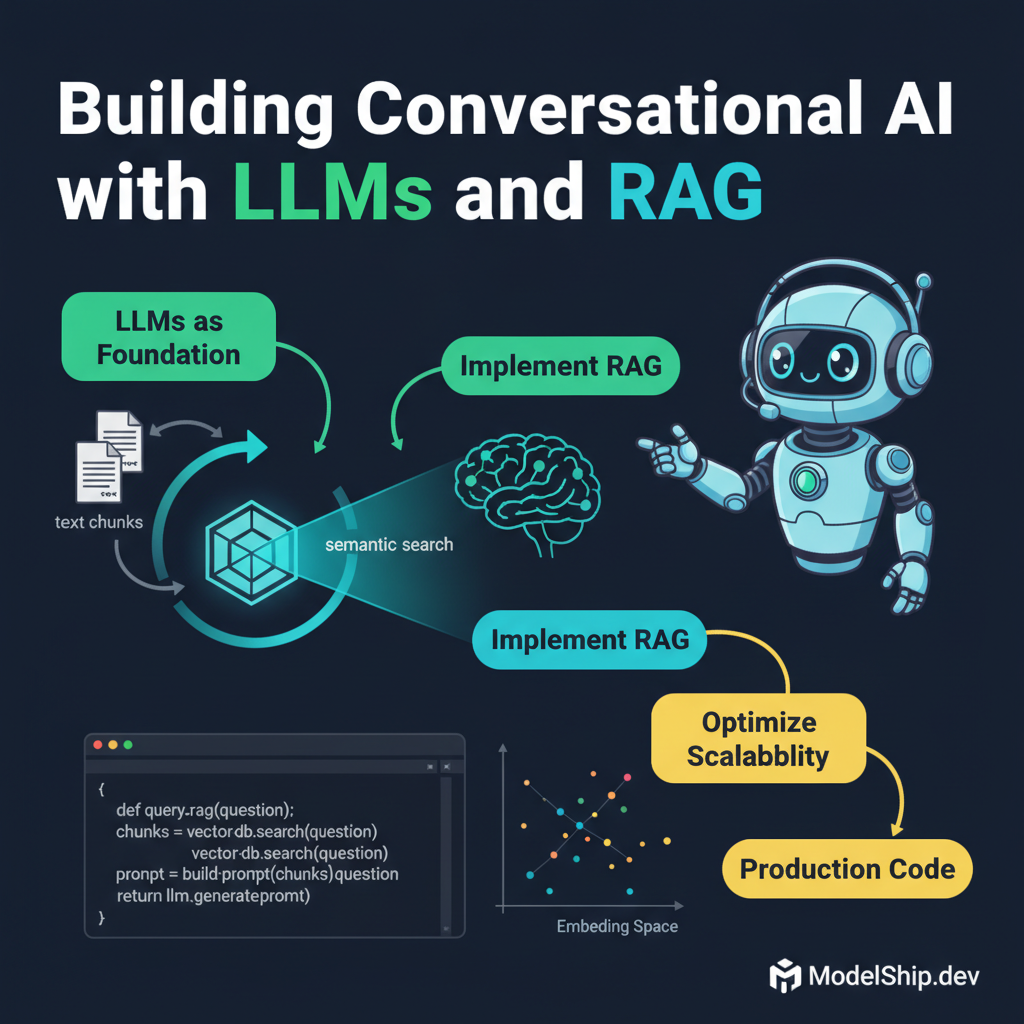
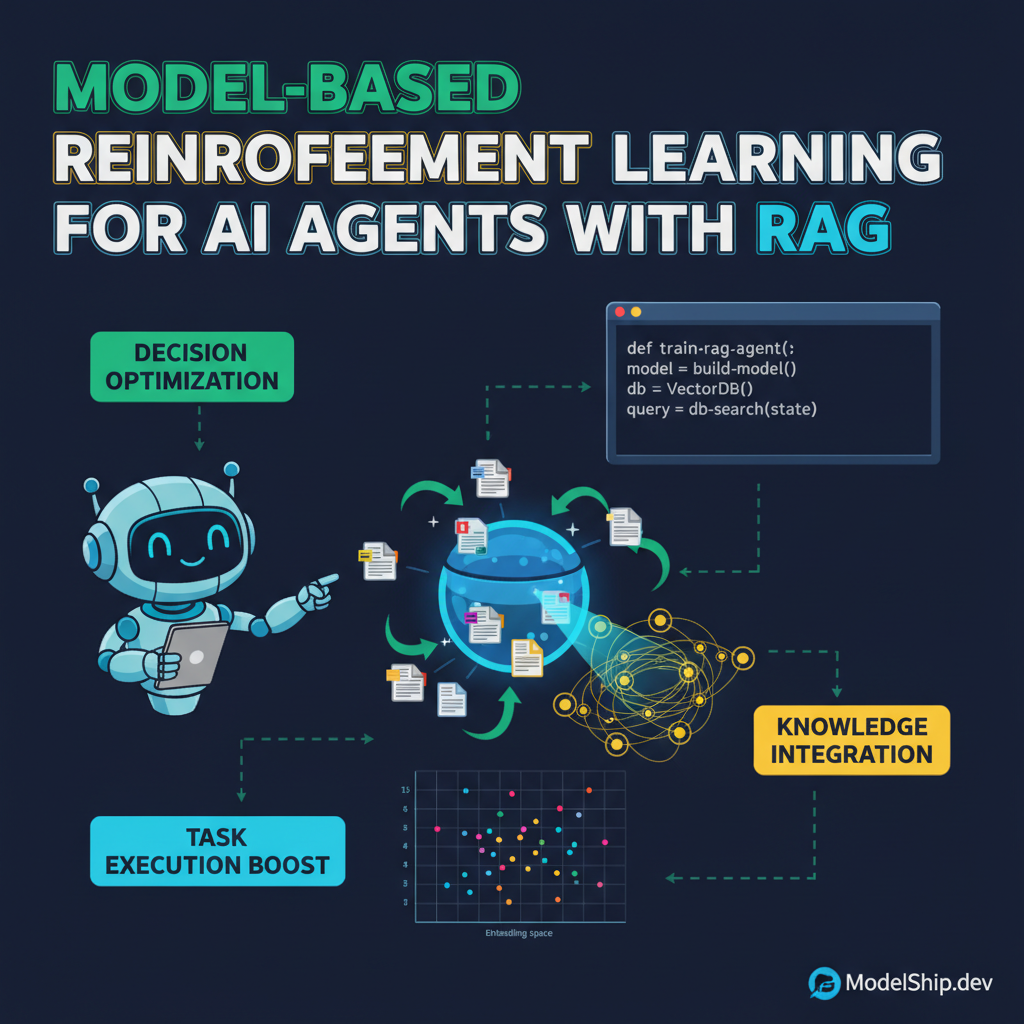
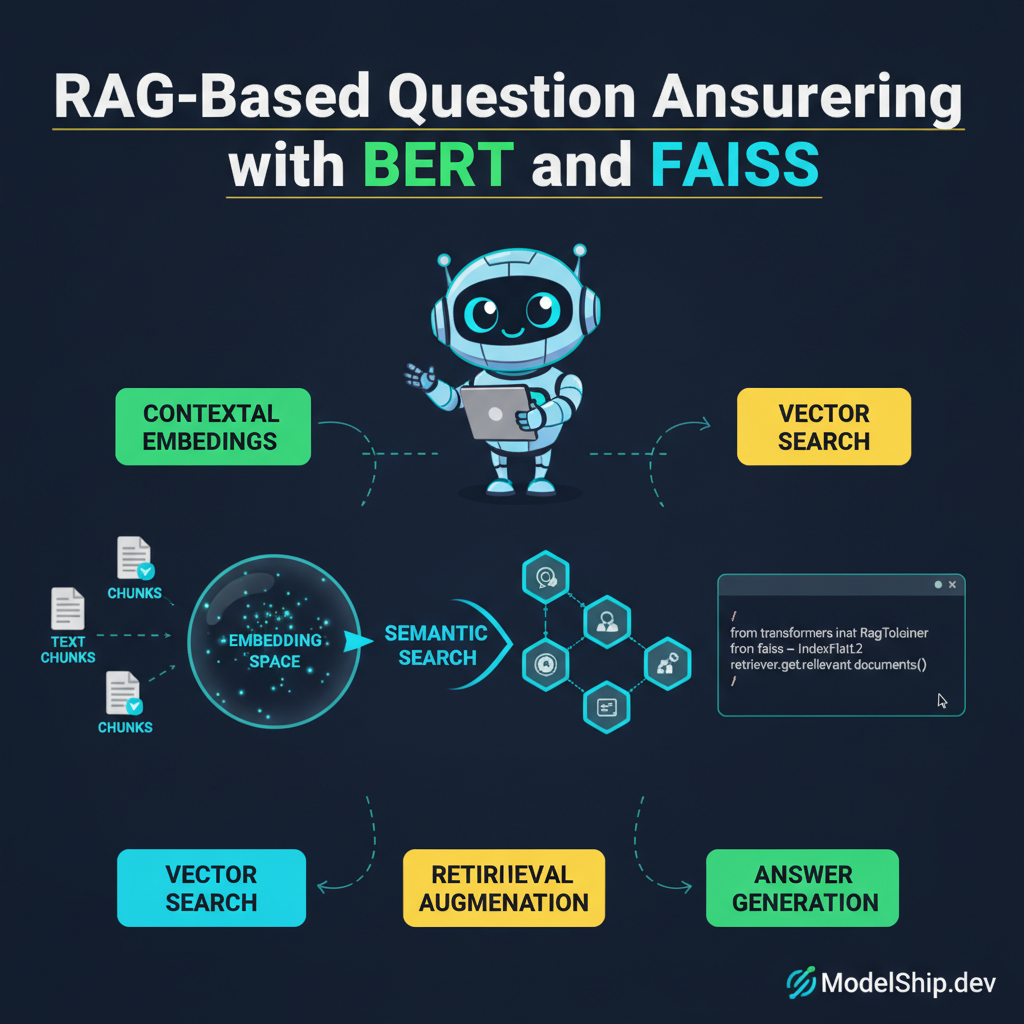
RAG-Based Question Answering with BERT and FAISS
TL;DR
In this tutorial, you'll learn how to use RAG-based question answering with BERT and FAISS to improve your search results. Think of it like having a super smart librarian who can find the exact answer to your question in a vast library of texts. I love this approach because it combines the power of natural language processing with the efficiency of vector search. You don't need to be a programmer to get started, but you will need some basic knowledge of machine learning and AI concepts.
Key Takeaways
- Use pre-trained language models like BERT to generate contextualized embeddings for questions and texts
- Apply vector search techniques like FAISS to efficiently find similar vectors in your database
- Implement RAG-based question answering to retrieve relevant texts and generate answers
- Fine-tune your model with custom datasets and hyperparameters for better performance
- Monitor and evaluate your model's performance using metrics like accuracy and F1 score
Introduction to RAG-Based Question Answering
Think of it like having a conversation with a knowledgeable friend - you ask a question, and they provide a detailed answer based on their understanding of the topic. RAG-based question answering works in a similar way, using a combination of natural language processing (NLP) and vector search techniques to find the most relevant texts and generate answers.
What is RAG?
RAG stands for Retrieval-Augmented Generator, which refers to a type of question answering model that uses a retrieval component to fetch relevant texts and a generation component to produce answers.
Why Use RAG-Based Question Answering?
Don't worry if you're new to this - RAG-based question answering is a powerful approach that can help you improve your search results and provide more accurate answers to user queries. Here's a simple way to think about it: imagine you have a large database of texts, and you want to find the most relevant ones in response to a user's question. RAG-based question answering can help you do just that.
Preparing Your Data
Before you can start using RAG-based question answering, you need to prepare your data. This involves tokenizing your texts, removing stop words, and converting everything to lowercase. Think of it like cleaning and preprocessing your data for use in a machine learning model.
Tokenization
Tokenization is the process of splitting your text into individual words or tokens. You can use a library like NLTK or spaCy to perform tokenization.
Removing Stop Words
Stop words are common words like 'the', 'and', and 'a' that don't add much value to your text. You can remove them to reduce the noise in your data.
Using BERT for Embeddings
BERT is a pre-trained language model that can be used to generate contextualized embeddings for your texts. Think of it like having a super smart encoder that can capture the nuances of language and provide rich representations of your texts.
What is BERT?
BERT stands for Bidirectional Encoder Representations from Transformers, which is a type of neural network architecture that's particularly well-suited for NLP tasks.
Using BERT for Embeddings
You can use the Hugging Face Transformers library to load pre-trained BERT models and generate embeddings for your texts. Here's an example code snippet:
from transformers import BertTokenizer, BertModel
tokenizer = BertTokenizer.from_pretrained('bert-base-uncased')
model = BertModel.from_pretrained('bert-base-uncased')
inputs = tokenizer.encode('This is an example sentence', return_tensors='pt')
outputs = model(inputs)
embeddings = outputs.last_hidden_state[:, 0, :]Using FAISS for Vector Search
FAISS is a library for efficient vector search and clustering. Think of it like having a super fast librarian who can find the most similar vectors in your database in a matter of milliseconds.
What is FAISS?
FAISS stands for Facebook AI Similarity Search, which is a library developed by Facebook AI Research for efficient vector search and clustering.
Using FAISS for Vector Search
You can use the FAISS library to build an index of your embeddings and perform efficient vector search. Here's an example code snippet:
import faiss
index = faiss.IndexFlatL2(128)
index.add(embeddings)Implementing RAG-Based Question Answering
Now that you have your embeddings and index, you can implement RAG-based question answering. Think of it like having a conversation with a knowledgeable friend - you ask a question, and they provide a detailed answer based on their understanding of the topic.
Retrieval Component
The retrieval component is responsible for fetching relevant texts from your database. You can use the FAISS library to perform vector search and retrieve the most similar vectors.
Generation Component
The generation component is responsible for producing answers based on the retrieved texts. You can use a pre-trained language model like BERT to generate answers.
Frequently Asked Questions
What is the difference between RAG-based question answering and traditional question answering?
RAG-based question answering uses a combination of retrieval and generation components to provide more accurate answers, whereas traditional question answering relies solely on generation components.
Can I use RAG-based question answering for other NLP tasks?
Yes, RAG-based question answering can be used for other NLP tasks like text summarization, sentiment analysis, and machine translation.
How do I evaluate the performance of my RAG-based question answering model?
You can evaluate the performance of your model using metrics like accuracy, F1 score, and ROUGE score. For more information, check out our article on Monitoring AI Model Performance with Prometheus and Grafana and Optimizing Vector Search with Quantization and Pruning.
Conclusion
In conclusion, RAG-based question answering is a powerful approach that can help you improve your search results and provide more accurate answers to user queries. By combining the power of NLP and vector search, you can build a robust and efficient question answering system that can handle a wide range of applications. Don't forget to check out our other articles on Building Production RAG Pipelines with Supabase pgvector and Custom Embedding Layer in PyTorch LLM for more information on how to implement RAG-based question answering in your own applications.
I help everyday people understand and use AI tools without a tech degree. Former teacher turned content creator — I believe AI should be accessible to everyone.
More from Priya Patel →Discussion
Loading comments…
Leave a comment
Related Articles