Practical Guide to RAG Pipelines Evaluation Metrics
TL;DR
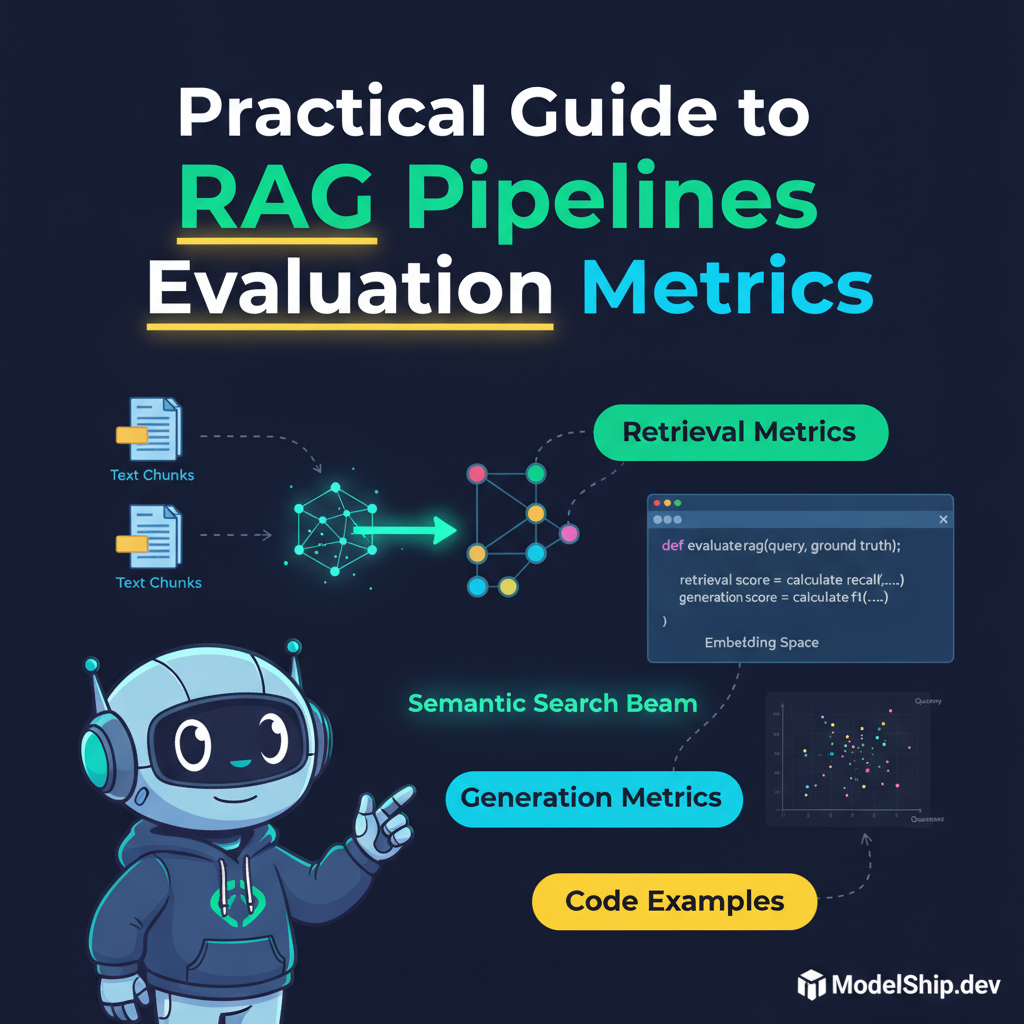
Here's the thing, evaluating RAG pipelines is crucial for model performance. In my experience, it's not just about calculating metrics, but also understanding what they mean. This guide will walk you through the process of evaluating RAG pipelines, highlighting common pitfalls and offering practical tips. Let me show you exactly how I do this, with working code examples and explanations.
Key Takeaways
- Understand the importance of evaluation metrics for RAG pipelines
- Learn to calculate key metrics, including retrieval and generation performance
- Implement working code examples for evaluation metrics
- Avoid common pitfalls and improve model efficiency
- Integrate evaluation metrics into your overall model development workflow
Introduction to RAG Pipelines Evaluation
Here's the thing, evaluating RAG pipelines is crucial for model performance. In my experience, it's not just about calculating metrics, but also understanding what they mean. This guide will walk you through the process of evaluating RAG pipelines, highlighting common pitfalls and offering practical tips.Retrieval Component Evaluation
Let's start with the retrieval component. This is the part most tutorials skip, but it's essential for overall model performance. To evaluate the retrieval component, we need to calculate metrics such as precision, recall, and F1 score.import numpy as np
from sklearn.metrics import precision_score, recall_score, f1_score
# Define your retrieval component predictions and ground truth
predictions = np.array([1, 0, 1, 1, 0])
ground_truth = np.array([1, 1, 0, 1, 0])
# Calculate precision, recall, and F1 score
precision = precision_score(ground_truth, predictions)
recall = recall_score(ground_truth, predictions)
f1 = f1_score(ground_truth, predictions)
print(f'Precision: {precision:.3f}, Recall: {recall:.3f}, F1 score: {f1:.3f}')Generation Component Evaluation
Now, let's move on to the generation component. This is where things can get tricky. To evaluate the generation component, we need to calculate metrics such as BLEU score, ROUGE score, and METEOR score.from nltk.translate.bleu_score import sentence_bleu
from nltk.translate.bleu_score import SmoothingFunction
from nltk.tokenize import word_tokenize
# Define your generation component predictions and ground truth
prediction = 'This is a test sentence.'
ground_truth = 'This is another test sentence.'
# Calculate BLEU score
def calculate_bleu(prediction, ground_truth):
prediction_tokens = word_tokenize(prediction)
ground_truth_tokens = word_tokenize(ground_truth)
return sentence_bleu([ground_truth_tokens], prediction_tokens, smoothing_function=SmoothingFunction().method4)
bleu_score = calculate_bleu(prediction, ground_truth)
print(f'BLEU score: {bleu_score:.3f}')Implementing Evaluation Metrics in Practice
In practice, implementing evaluation metrics for RAG pipelines involves integrating them into your overall model development workflow. This is where RAG-based question answering with BERT and FAISS comes in handy. By using pre-trained models and fine-tuning them for your specific task, you can improve model efficiency and accuracy.Common Pitfalls and Mistakes
When implementing evaluation metrics for RAG pipelines, there are several common pitfalls and mistakes to avoid. One of the most common mistakes is not properly evaluating the retrieval component.Best Practices and Recommendations
So, what are the best practices and recommendations for evaluating RAG pipelines? Here are a few tips:Advanced Topics and Future Directions
Now that we've covered the basics of evaluating RAG pipelines, let's dive into some advanced topics and future directions. One area of research is building hybrid RAG systems with LangGraph and ElasticSearch. By combining the strengths of different models and techniques, we can create more powerful and efficient RAG systems.Optimizing Vector Search with Quantization and Pruning
Another area of research is optimizing vector search with quantization and pruning. By reducing the dimensionality of vector search, we can improve model efficiency and accuracy.import numpy as np
from sklearn.metrics.pairwise import cosine_similarity
# Define your vector search data
data = np.array([[1, 2, 3], [4, 5, 6], [7, 8, 9]])
# Calculate cosine similarity
similarity = cosine_similarity(data)
print(similarity)Frequently Asked Questions
What is the purpose of evaluating RAG pipelines?
Evaluating RAG pipelines is crucial for model performance. It helps to identify areas of improvement and optimize the model for better accuracy and efficiency.
How do I calculate precision, recall, and F1 score for the retrieval component?
To calculate precision, recall, and F1 score for the retrieval component, you need to define your retrieval component predictions and ground truth, and then use a library such as scikit-learn to calculate the metrics.
What is the difference between BLEU score, ROUGE score, and METEOR score?
BLEU score, ROUGE score, and METEOR score are all evaluation metrics for the generation component. BLEU score measures the similarity between the predicted and ground truth text, while ROUGE score measures the recall of the predicted text. METEOR score measures the similarity between the predicted and ground truth text, taking into account the order of the words.
Conclusion
In conclusion, evaluating RAG pipelines is a crucial step in model development. By understanding the importance of evaluation metrics and implementing them in practice, you can improve model efficiency and accuracy. Remember to avoid common pitfalls and mistakes, and follow best practices and recommendations for evaluating RAG pipelines. For more information on building production RAG pipelines with Supabase pgvector, check out our other articles on ModelShip.7 years building production AI systems. I write about the stuff that actually works in the real world — practical code, real architectures, zero fluff.
More from Alex Chen →Discussion
Loading comments…
Leave a comment
Related Articles