AI Safety and Deepfakes: Risks and Consequences Explained
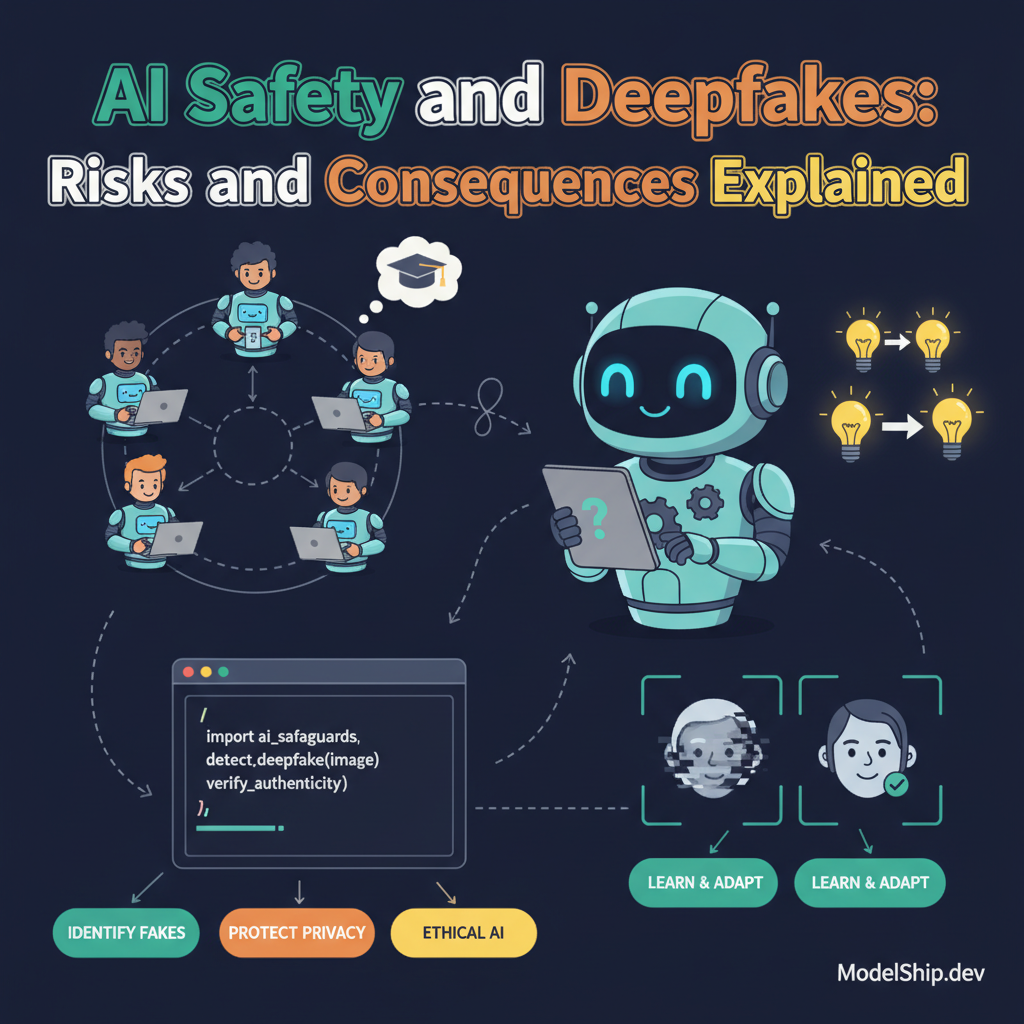
TL;DR
AI safety is crucial in today's world, and deepfakes are a significant concern. Think of it like a security system for your online presence. Don't worry if you're new to this - I'll break it down in simple terms. You don't need to be a programmer to understand the risks and consequences of AI misuse.
Key Takeaways
- Understand the concept of AI safety and its importance
- Learn about deepfakes and their potential consequences
- Discover how to identify and avoid deepfakes
- Explore the role of AI ethics in preventing misuse
- Find out how to stay safe online in the age of AI
Introduction to AI Safety
Think of AI safety like a seatbelt for your online presence. It's essential to understand the risks and consequences of AI misuse. Here's a simple way to think about it: AI safety is about protecting yourself and others from the potential harm caused by AI systems.
Why AI Safety Matters
AI safety matters because it can impact our daily lives in significant ways. For example, deepfakes can be used to spread misinformation or manipulate public opinion. Don't worry if you're new to this - I'll explain it in simple terms.
Real-Life Examples of AI Safety
Let's consider a real-life example. Suppose you receive a video that appears to be a public figure making a controversial statement. However, it's actually a deepfake created to manipulate public opinion. You don't need to be a programmer to understand the risks and consequences of such actions.
Understanding Deepfakes
Deepfakes are AI-generated content that can be used to manipulate or deceive people. Think of it like a fake ID, but for online content. Here's a simple way to identify deepfakes: look for inconsistencies in the video or audio.
How Deepfakes Are Created
Deepfakes are created using complex AI algorithms that can generate realistic video or audio content. However, it's not just about the technology - it's also about the intent behind its use. I love this trick because it highlights the importance of critical thinking in the age of AI.
Consequences of Deepfakes
The consequences of deepfakes can be severe, ranging from financial loss to reputational damage. Consider the example of a deepfake video that manipulates a public figure's statement, leading to widespread misinformation. You don't need to be an expert to understand the risks and consequences of such actions.
AI Ethics and Safety
AI ethics play a crucial role in preventing the misuse of AI systems. Think of it like a set of guidelines for responsible AI development and use. Here's a simple way to think about it: AI ethics is about ensuring that AI systems are developed and used in a way that benefits society as a whole.
Introduction to AI Ethics
AI ethics is a field that explores the social and ethical implications of AI development and use. It's essential to consider the potential consequences of AI systems on individuals and society as a whole. Don't worry if you're new to this - I'll break it down in simple terms.
Best Practices for AI Ethics
Best practices for AI ethics include transparency, accountability, and fairness. Consider the example of a company that develops an AI system for healthcare applications. They must ensure that the system is transparent, accountable, and fair in its decision-making processes.
Staying Safe Online
Staying safe online in the age of AI requires critical thinking and caution. Think of it like navigating a busy street - you need to be aware of your surroundings and potential risks. Here's a simple way to stay safe: be cautious when sharing or believing online content, and always verify the source.
Practical Tips for Online Safety
Practical tips for online safety include using strong passwords, being cautious with links and attachments, and verifying the source of online content. Consider the example of a person who receives a suspicious email with a link to a deepfake video. They must be cautious and verify the source before sharing or believing the content.
Role of AI in Online Safety
The role of AI in online safety is complex and multifaceted. On one hand, AI can be used to detect and prevent online threats. On the other hand, AI can also be used to create and spread deepfakes. Learn more about AI ethics and its implications for online safety.
Frequently Asked Questions
What is a deepfake?
A deepfake is an AI-generated content that can be used to manipulate or deceive people. It can be a video, audio, or image that appears to be real but is actually created using AI algorithms.
How can I identify deepfakes?
You can identify deepfakes by looking for inconsistencies in the video or audio. Be cautious when sharing or believing online content, especially if it seems too good (or bad) to be true. Learn more about machine learning and its role in deepfake detection.
What is AI ethics?
AI ethics is a field that explores the social and ethical implications of AI development and use. It's essential to consider the potential consequences of AI systems on individuals and society as a whole. Learn more about multi-agent systems and their role in AI ethics.
Conclusion
In conclusion, AI safety and deepfakes are critical concerns in today's world. It's essential to understand the risks and consequences of AI misuse and take steps to stay safe online. Remember, AI safety is not just about technical aspects, but also about social and ethical implications. By being aware of the potential risks and consequences, we can work together to create a safer and more responsible AI ecosystem. Consider exploring topics like monitoring AI systems for more insights.
I help everyday people understand and use AI tools without a tech degree. Former teacher turned content creator — I believe AI should be accessible to everyone.
More from Priya Patel →Discussion
Loading comments…