LoRA Fine-Tuning for LLMs: Unlock Efficient Adaptation
TL;DR
LoRA fine-tuning offers a streamlined approach to adapting large language models to specific tasks or domains, significantly reducing the need for large-scale retraining. By understanding how LoRA works and implementing it effectively, developers can enhance the capabilities of their LLMs. This method is particularly useful for tasks where full model retraining is impractical due to dataset size or computational constraints.
Key Takeaways
- Understanding the fundamentals of LoRA and its application in fine-tuning LLMs
- Implementing LoRA fine-tuning for adapting LLMs to specific tasks or domains
- Recognizing the efficiency and performance improvements offered by LoRA over traditional fine-tuning methods
- Applying best practices for LoRA integration into existing model development workflows
- Evaluating the trade-offs between LoRA fine-tuning and full model retraining for different scenarios
Introduction to LoRA Fine-Tuning
The key insight here is that large language models (LLMs) can be efficiently adapted to specific tasks or domains using LoRA fine-tuning, a method that significantly reduces the need for large-scale retraining. This approach is crucial for tasks where full model retraining is impractical due to dataset size or computational constraints.
Understanding LoRA
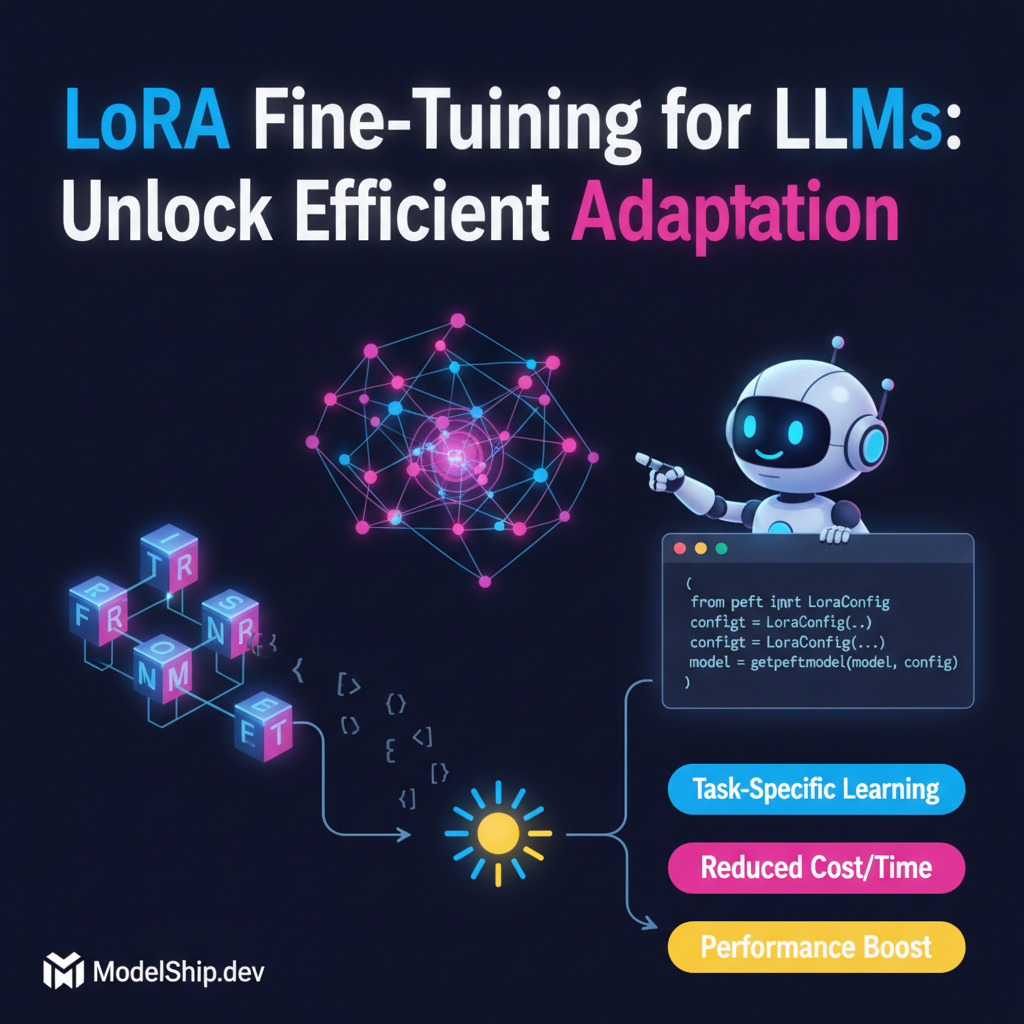
LoRA, or Low-Rank Adaptation, is a technique designed to efficiently adapt pre-trained models to new tasks or datasets by updating only a small subset of the model's parameters. What most tutorials miss is that LoRA's efficiency stems from its ability to leverage the existing knowledge encoded in the pre-trained model, thereby requiring much less data and computational resources for adaptation.
How LoRA Works
Let's break this down step by step: LoRA involves adding low-rank matrices to the model's weight matrices, which allows for the adaptation of the model to new tasks without altering the original weights. Here's why this matters: it enables the preservation of the model's general knowledge while still allowing for task-specific adjustments.
Benefits of LoRA
A common misconception is that LoRA is just another fine-tuning method. However, its ability to adapt models with minimal parameter updates makes it particularly useful for edge cases or when working with limited data. For instance, when migrating TensorFlow LLM to PyTorch for better performance, LoRA can be a valuable tool for fine-tuning the model on specific tasks without fully retraining it.
Implementing LoRA Fine-Tuning
To implement LoRA fine-tuning, one must first understand the architecture of their LLM and how LoRA can be integrated into it. Let's consider a practical example using PyTorch, where we might use serving LLM predictions with a RESTful API to deploy our fine-tuned model.
import torch
from transformers import AutoModelForSequenceClassification

# Load pre-trained model
model = AutoModelForSequenceClassification.from_pretrained('bert-base-uncased')

# Implement LoRA fine-tuning logic here
# This involves adding low-rank matrices to the model's weights
# and defining the adaptation process
Step-by-Step LoRA Implementation
For a step-by-step implementation, consider the following high-level steps: define your task-specific dataset, prepare your model architecture with LoRA integration, and train the model using the adapted LoRA method. Remember, the key to successful LoRA implementation is understanding how to balance the adaptation process with the preservation of the model's general knowledge.
Common Pitfalls and Best Practices
A common mistake in LoRA fine-tuning is over-adapting the model to the new task, which can result in poor performance on other tasks.
Monitoring Performance
Here's why monitoring is crucial: it allows you to catch over-adaptation early and make necessary adjustments to prevent degradation of the model's general performance. Consider integrating automating LLM testing into your workflow to ensure consistent evaluation and adaptation.
Frequently Asked Questions
What is LoRA Fine-Tuning?
LoRA fine-tuning is a method for efficiently adapting pre-trained models to new tasks or datasets by updating only a small subset of the model's parameters.
How Does LoRA Compare to Full Model Retraining?
LoRA fine-tuning is more efficient and requires less data and computational resources than full model retraining, but the choice between the two depends on the specific project requirements.
Can LoRA be Used with Any Model Architecture?
While LoRA can be adapted to various model architectures, its implementation may vary depending on the architecture and the specific task at hand. For complex models or those with unique requirements, such as building explainable AI with SHAP and LIME, customization of the LoRA method may be necessary.
Conclusion
In conclusion, LoRA fine-tuning provides a powerful tool for efficiently adapting LLMs to specific tasks or domains, offering a balance between model performance and computational efficiency. By understanding the principles of LoRA and implementing it effectively, developers can unlock the full potential of their LLMs and achieve better performance in a wide range of applications.
PhD in NLP, now building AI products. I explain the 'why' behind AI systems so you can make better engineering decisions, not just copy-paste code.
More from Dr. Sarah Kim →Discussion
Loading comments…
Leave a comment
Related Articles