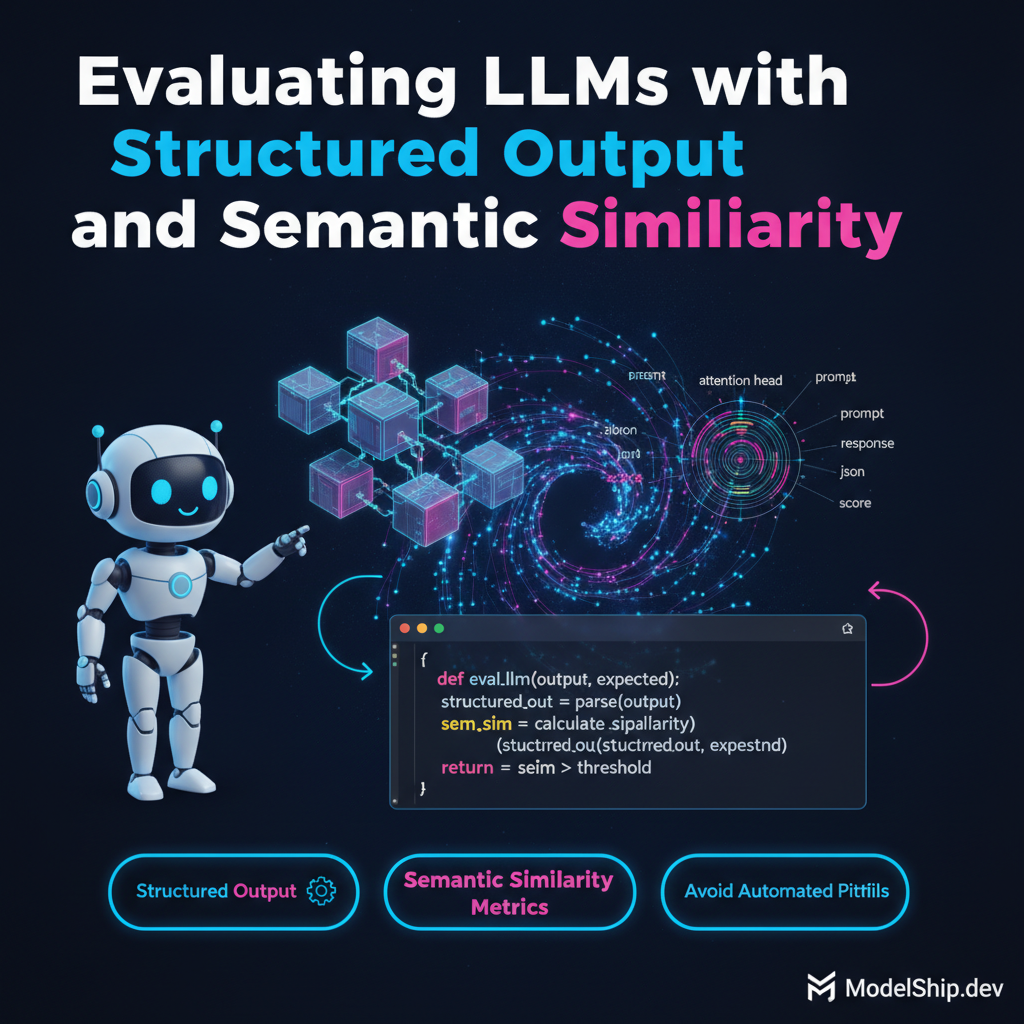
Evaluating LLMs with Structured Output and Semantic Similarity
TL;DR
When evaluating LLMs, skip the theory and focus on production-ready metrics like structured output and semantic similarity. I've been burned by this exact mistake before, so don't underestimate the importance of robust evaluation. Here's what works: use a combination of automated testing and human evaluation to get a comprehensive understanding of your LLM's performance.
Key Takeaways
- Use structured output to evaluate LLMs in production environments
- Implement semantic similarity metrics to measure LLM performance
- Avoid relying solely on automated testing for LLM evaluation
- Combine human evaluation with automated testing for comprehensive results
- Production tip: use tools like <a href="/blog/optimizing-ai-model-inference-with-intel-openvino">Optimizing AI Model Inference with Intel OpenVINO</a> to optimize LLM inference
Introduction to LLM Evaluation
When it comes to evaluating Large Language Models (LLMs), most engineers get this wrong: they focus too much on theoretical metrics and not enough on production-ready evaluation. In this article, we'll cover how to evaluate LLMs with structured output and semantic similarity, and provide production tips and tricks to help you avoid common pitfalls.
Structured Output Evaluation
What is Structured Output?
Structured output refers to the ability of an LLM to generate output that is formatted in a specific way, such as a JSON object or a CSV file. This is important in production environments where downstream tasks rely on the output of the LLM being in a specific format.
Evaluating Structured Output
To evaluate structured output, you can use metrics such as precision, recall, and F1 score. These metrics measure the accuracy of the LLM's output and can be used to compare the performance of different models. For example, you can use Serving LLM Predictions with RESTful API using Flask and Docker to serve LLM predictions and evaluate their structured output.
Semantic Similarity Evaluation
What is Semantic Similarity?
Semantic similarity refers to the ability of an LLM to generate output that is semantically similar to the input prompt. This is important in production environments where the LLM is used to generate text that needs to be coherent and relevant to the input prompt.
Evaluating Semantic Similarity
To evaluate semantic similarity, you can use metrics such as cosine similarity or embedding similarity. These metrics measure the similarity between the input prompt and the generated output and can be used to compare the performance of different models. For example, you can use Efficient Similarity Search in RAG with Embeddings to evaluate the semantic similarity of LLM output.
Common Pitfalls to Avoid
Relying Solely on Automated Testing
I've been burned by this exact mistake before: relying solely on automated testing for LLM evaluation. While automated testing is important, it's not enough to get a comprehensive understanding of your LLM's performance. Human evaluation is also necessary to catch errors and edge cases that automated testing may miss.
Not Using Production-Ready Metrics
Most engineers get this wrong: using metrics that are not production-ready. Production-ready metrics such as structured output and semantic similarity are essential for evaluating LLMs in production environments.
Test Yourself
Answer: Structured output refers to the ability of an LLM to generate output that is formatted in a specific way, while semantic similarity refers to the ability of an LLM to generate output that is semantically similar to the input prompt.
Code Examples
import json
from sklearn.metrics import precision_score, recall_score, f1_score

# Evaluate structured output
def evaluate_structured_output(llm_output, gold_output):
    precision = precision_score(llm_output, gold_output)
    recall = recall_score(llm_output, gold_output)
    f1 = f1_score(llm_output, gold_output)
    return precision, recall, f1

# Evaluate semantic similarity
def evaluate_semantic_similarity(llm_output, input_prompt):
    similarity = cosine_similarity(llm_output, input_prompt)
    return similarity
from flask import Flask, request, jsonify
from sklearn.metrics import cosine_similarity
app = Flask(__name__)
# Serve LLM predictions and evaluate structured output
@app.route('/predict', methods=['POST'])
def predict():
input_prompt = request.get_json()['input_prompt']
llm_output = request.get_json()['llm_output']
precision, recall, f1 = evaluate_structured_output(llm_output, input_prompt)
return jsonify({'precision': precision, 'recall': recall, 'f1': f1})Frequently Asked Questions
What is the best way to evaluate LLMs?
The best way to evaluate LLMs is to use a combination of automated testing and human evaluation, and to focus on production-ready metrics such as structured output and semantic similarity.
How can I use LLMs in production environments?
You can use LLMs in production environments by serving their predictions with a RESTful API, such as Serving LLM Predictions with RESTful API using Flask and Docker, and by evaluating their performance with production-ready metrics.
What are some common pitfalls to avoid when evaluating LLMs?
Some common pitfalls to avoid when evaluating LLMs include relying solely on automated testing, and not using production-ready metrics. You should also be careful not to overfit your LLM to the evaluation metrics, and to use a combination of metrics to get a comprehensive understanding of your LLM's performance.
Conclusion
In conclusion, evaluating LLMs with structured output and semantic similarity is essential for production-grade AI engineering. By following the tips and tricks outlined in this article, you can avoid common pitfalls and get a comprehensive understanding of your LLM's performance. Remember to use a combination of automated testing and human evaluation, and to focus on production-ready metrics. With the right evaluation strategy, you can unlock the full potential of your LLM and achieve production-ready results.
Built and scaled AI systems that handle millions of requests. I write about what separates tutorial AI from production AI — the hard lessons, the battle-tested patterns.
More from Marcus Lee →Discussion
Loading comments…
Leave a comment
Related Articles